The Atlanta Braves are facing an urgent need to address their shortstop position after newly signed starter Ha-Seong Kim suffered a torn finger tendon, a painful injury that is expected to keep him sidelined for four to five critical months of the 2026 season. This setback creates a substantial hole in their infield, particularly alarming for a team that has struggled to find consistent production at shortstop since 2022. Over the last three seasons, the Braves have struggled to secure a reliable shortstop, posting a disappointing -3.4 bWAR at the position between 2023 and 2025.
In response to this pressing issue, the Braves have sought to fill the gap by signing or re-signing utility players such as Jorge Mateo and Luke Williams, as well as trading for versatile utilityman Mauricio Dubon. While these acquisitions add depth, they may still be in the market for a more permanent solution, given the long-term void left by Kim’s injury.
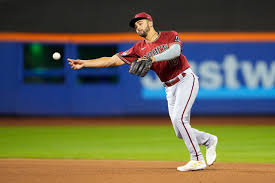
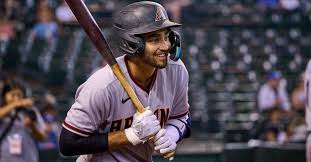
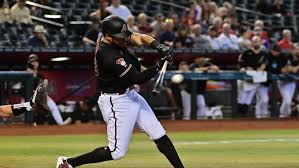
One tantalizing option for the Braves could be Jordan Lawlar, a player long regarded as one of the most promising prep bats from the 2021 MLB Draft, where he was selected sixth overall, complete with a premium signing bonus. Scouts have consistently identified him as a potential five-tool player, showcasing impressive bat-to-ball skills paired with above-average power, exceptional speed, and a strong arm. This combination positions him as a candidate for an impactful regular within a major league lineup.
Should the Braves pursue Lawlar and negotiate a contract extension, they would be banking on his impressive upside: a bat capable of slotting into the top of the order, along with a rare mix of speed and power that could provide versatility across the infield. This “Swiss Army knife” capability would not only enhance Atlanta’s depth but also offer long-term stability at a premier defensive position.
Opting for an early extension with a young player like Lawlar presents a distinct advantage over signing an expensive veteran free agent. Such a move grants the Braves team control at a relatively low cost, allowing them to allocate resources elsewhere—be it to help the rotation, bolster the bullpen, or address other pivotal needs. A long-term deal for Lawlar would lock in a potential everyday star through his 30s, significantly reducing the financial burdens associated with arbitration and making him a vital asset for the organization’s future.
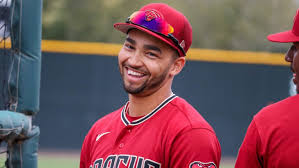
Atlanta’s roster features a blend of seasoned veterans and emerging talents, making the pursuit of Lawlar a clear indication of the team’s commitment to building a competitive lineup capable of contending both now and in the years to come. If Lawlar reaches his projected peak, he has the potential to be a cornerstone piece during multiple playoff runs.
However, Lawlar’s career has been marred by injury challenges—ranging from shoulder surgery early in his professional journey to subsequent thumb and hamstring issues that severely limited his playing time in 2024 and 2025. This injury history presents a risk for any long-term deal, as the Braves would be investing in a high-ceiling player who may struggle to maintain consistent field availability.
In contrast to his current situation in Arizona—where Lawlar is blocked at shortstop by Geraldo Perdomo’s extension and by established veterans in the middle infield—the Braves would need to create a clear role for him. Without ample opportunity, he risks stagnating, as he did during his part-time appearances in Arizona, which ultimately hampers his developmental trajectory. The timing couldn’t be more opportune for Lawlar; with an open spot at short and plenty of veteran mentorship available, he could smoothly transition into the role of everyday starter.
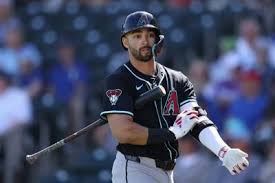
Acquiring Lawlar, however, would likely require the Braves to part ways with significant prospect capital or adjust their roster significantly. This could lead to the sacrifice of depth in other areas. The potential cost reflects a high investment of top prospects, although it may be possible to exclude notable names like JR Ritchie, Cam Caminiti, or Hurston Waldrep from discussions. To retain those three, Anthopoulos would need to consider parting with at least two among top ten pitching prospects, possibly from the pool of Briggs McKenzie, Garrett Bauman, Didier Fuentes, or Owen Murphy. Additionally, they may need to include a major-league-ready positional player like Nacho Alvarez or David McCabe, alongside one of the pitchers such as Bryce Elder, Joey Wentz, or Grant Holmes.
This bold move would symbolize the Braves embracing a forward-thinking strategy focused on long-range roster construction, rather than reverting to short-term fixes. If they determine that Lawlar’s talent warrants such a leap, and if they believe they can provide the nurturing environment essential for his development, they would effectively be buying into a promising young talent with five-tool qualities, cost control, and exceptional versatility. Lawlar could evolve into a crucial building block and catalyst in the lineup for years to come, instilling hope in Braves fans as the organization seeks to finally resolve a positional issue that has haunted them for years.
 Bravos Insight
Leave a comment