
Chris Bassitt is an experienced right-handed pitcher who entered free agency this offseason following a commendable season with the World Series runner-up Toronto Blue Jays. He has garnered interest from multiple teams seeking rotational depth; however, throughout the offseason, his name has been prominently linked to the Atlanta Braves. Although he may not be as high-profile as some other pitchers available, securing his services could provide Atlanta with both stability and experience. Significantly, he is not subject to a qualifying offer, which would preserve the Braves’ draft capital and draft pool allotment—a critical consideration as General Manager Alex Anthopoulos is charged with not only fielding a competitive major league roster but also revitalizing a farm system that has dwindled under his leadership. This analysis will examine both the strengths and weaknesses of Chris Bassitt, providing a comprehensive view to offer an informed evaluation of the free-agent pitcher.

Bassitt has reliably logged over 150 innings in recent seasons, exceeding 170 innings for the fourth consecutive year in 2025, demonstrating his capacity to manage a starter’s workload well into his mid-30s. For a postseason-contending team like the Braves, this durability is crucial: it alleviates pressure on the bullpen and provides the team with a reliable mid-rotation pitcher. This becomes especially significant following last year’s injury-plagued season. Instead of depending on high strikeout rates, Bassitt succeeds by inducing weak contact and ground balls. In 2025, he ranked among the top third of MLB pitchers in both ground-ball rate and walk rate, a profile that is well-suited for pitching-friendly venues such as Truist Park. This skill in minimizing hard contact proves to be exceptionally advantageous in pivotal division matchups and during playoff series where outcomes based on balls in play are critical.
Bassitt will be approximately 37 years old next season, and while his on-field performance has been satisfactory, age introduces significant risk factors. As pitchers age, regression is a prevalent phenomenon; it is an inevitable aspect of their careers. However, pitchers like Bassitt, who attain success primarily through control and pitch variety rather than sheer power, often enjoy a more extended tenure in the professional arena because of the reduced physical strain on their bodies compared to those who depend on overpowering pitches. Longevity hinges on their capacity to maintain precise control of their pitches. A decline in control—an issue frequently linked to aging—can result in rapid performance declines, particularly in the absence of elite velocity or an unconventional pitch repertoire to compensate for such losses. This presents a complex dilemma regarding Bassitt’s future trajectory. His strikeout rates are average rather than outstanding, which may suffice for certain rotations; however, teams like the Braves, who excel at generating strikeouts in critical situations, may prioritize pitchers capable of missing more bats. Although Bassitt induces weak contact, he may face challenges in consistently navigating high-pressure situations without the swing-and-miss capability typical of high-strikeout pitchers.
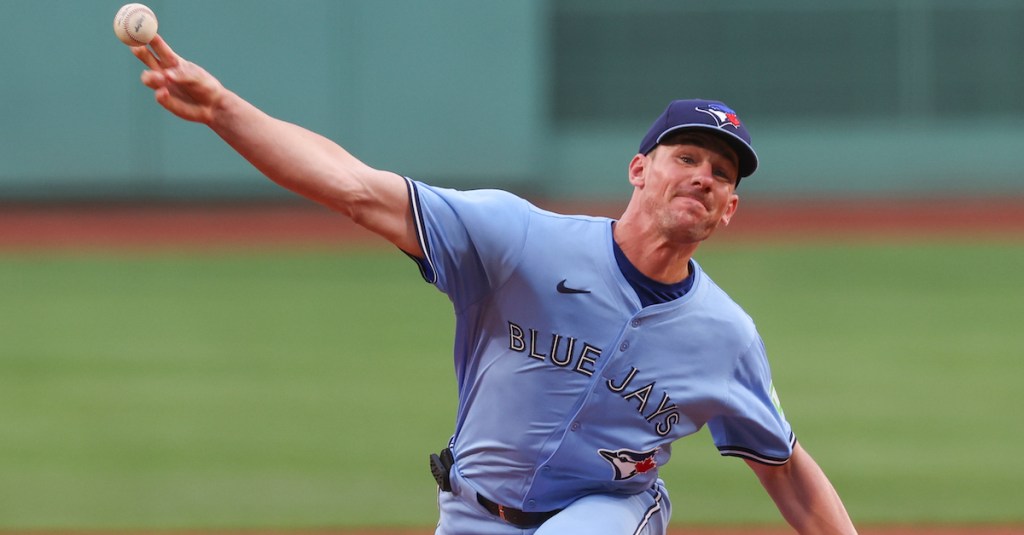
Bassitt demonstrates considerable flexibility and a commitment to fulfilling any role necessary to ensure his team’s success. This was particularly evident during the 2025 postseason, when he was used out of the bullpen, delivering scoreless innings in relief and demonstrating adaptability beyond the confines of a traditional starter. For Atlanta, which prioritizes strategic versatility, acquiring a pitcher capable of starting while also contributing effectively in critical relief situations may provide a significant advantage in late-game scenarios. At this juncture in his career, Bassitt offers a veteran presence within the clubhouse. His professional demeanor and extensive experience are instrumental in mentoring younger pitchers on the staff, an often-overlooked element of building a successful rotation.
Bassitt’s performance has shown considerable variability. He achieved notable value during segments of 2023 and most of 2025, yet also experienced downturns, particularly during a disappointing 2024 season. This pattern of year-to-year fluctuations indicates that he serves as a reliable but not premier component in a rotation. For a team aiming for World Series success, maintaining consistency throughout the season is crucial, and Bassitt’s history lacks unwavering dependability. Acquiring him may hinder Atlanta’s capacity to seek younger, high-potential pitching prospects, whether through free agency or trades. If the Braves commit a significant portion of their budget to a veteran starter, it could constrain their spending or flexibility in other areas—especially if the outcome yields mid-rotation innings instead of top-tier ace performance.

For Atlanta, acquiring Bassitt would be a logical move as a 1–2 year stopgap rotation option. He would serve to stabilize the middle of the rotation and complement more dominant arms, all without necessitating a significant financial investment or a long-term obligation. Should the Braves aim to balance experienced depth with top-tier talent, Bassitt is an appropriate fit. However, if their objective is to pursue elite performance or establish long-term rotation anchors, they may seek alternatives. With Sale, Strider, and Schwellenbach leading the rotation, Bassitt is ideally suited for the 4th position, but would excel as a #3 should Strider encounter early challenges in 2026. This scenario would permit Reynaldo Lopez and Grant Holmes to regain their health in the bullpen while allowing Hurston Waldrep to advance his development in the #5 slot. Additionally, this strategy provides the Braves with a deeper rotation capable of managing any unexpected injuries should the 2025 injury-plagued season begin to repeat itself.
 Bravos Insight
Leave a comment